
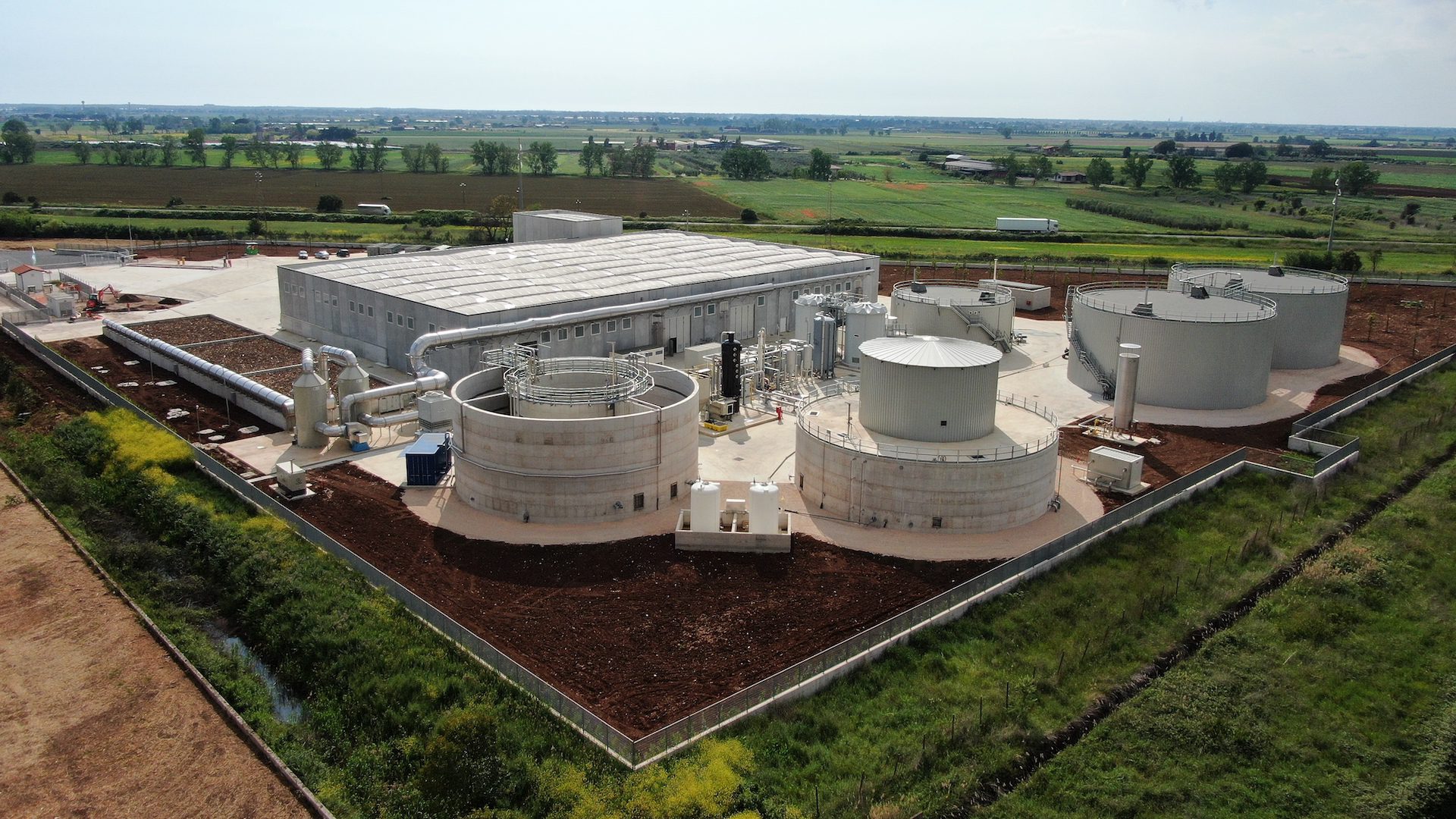
Raw biogas, typically composed of 55% to 65% methane, offers a viable feedstock for small-scale ammonia synthesis. While traditional Haber-Bosch facilities rely on massive, centralized infrastructure to achieve efficiency, modular technology is narrowing this gap. Developers like Proton Ventures and Stamicarbon are already proving that ammonia production can function at much smaller, decentralized scales. A plant processing 1,000 cubic metres of biogas per hour could theoretically yield 25 to 30 tonnes of ammonia daily, positioning these sites as a new industrial middle ground between laboratory kits and massive chemical complexes.
The business case for these facilities extends beyond simple production costs. By producing fertilizer directly at the source, operators eliminate transport logistics and avoid the price shocks inherent in international gas markets. However, success depends on high utilization and rigorous safety management, as ammonia remains a hazardous, pressurized substance. Furthermore, the environmental impact hinges on carbon management; while the process is technically capable of being carbon-negative by capturing biogenic CO2, the economic viability of such capture depends entirely on local infrastructure for transport or storage.
Rather than aiming to replace Europe’s bulk fertilizer industry, the immediate path forward lies in targeting large, stable agricultural digesters. Success will not be measured by the number of installations, but by the performance of initial, well-instrumented pilots. If these demonstrations prove reliable, the logic of the fertilizer industry—long tethered to massive, fossil-fuel-dependent ports—may begin to shift toward the farm gate, effectively closing the nutrient cycle where the gas is actually produced.
Comments (0)
No comments yet. Be the first!